
cutoff walls
Low permeability groundwater barriers for environmental protection, seepage control, and geotechnical stability.
Overview of cutoff walls
Cutoff walls are engineered low permeability vertical barriers installed to control horizontal groundwater movement in the subsurface. In controlling groundwater movement, these structures can help contain contaminants, isolate infrastructure, and support excavation or flood protection systems. For instance, cutoff walls can be used to install containment surrounding impacted materials on environmental remediation sites. In another application, a cutoff wall can help reduce seepage through a dam or levee to improve stability of the structure. In yet another example, a cutoff wall can be used to dramatically reduce the size or need for a dewatering system around an excavation.
Geo Solutions is an industry leader in the installation of cutoff walls having installed thousands in the nearly five decades the company has been operating. Geo Solutions pioneered the use of specialty materials in cutoff wall mixtures including attapulgite clays, special cements, and silicate blends to address chemical incompatibilities and achieve extremely low hydraulic conductivity. Cutoff walls are now a go-to solution to solve problems at landfills, levees, industrial sites, dams, embankments, and remediation projects.
We can install cutoff walls using a variety of techniques including slurry trenching, soil mixing, jet grouting, vibrated beam, and sheetpiling. The cutoff wall solution is customized for each site’s hydraulic, environmental, and structural requirements.
key benefits
- Control groundwater and seepage for dams, levees, landfills, and industrial facilities using proven SB/CB/SCB slurry trench methods.
- Achieve ultra low permeability and compatibility with aggressive leachates.
- Environmentally protective barriers for contaminated sites, containment cells, and industrial waste facilities.
- Flexible construction methods—trenching, excavator systems, clamshells, and composite sheet tie ins—adapt to tight or complex sites.
- Robust QA/QC practices supported by on site slurry testing, density control, and field laboratory capabilities.
Applications
- Levees, dams & embankments: seepage cutoff and hydraulic barrier installation.
- Landfills & industrial waste sites: vertical containment for leachate, CCR, and chemical impacts.
- Environmental remediation: isolation of contaminated groundwater plumes and brownfield containment systems.
- Flood protection & water control projects: cutoff barriers integrated with levee raises, floodwalls, and pump station work.
- Infrastructure protection: seepage control for hydroelectric plants, utilities, mining, and transportation structures.
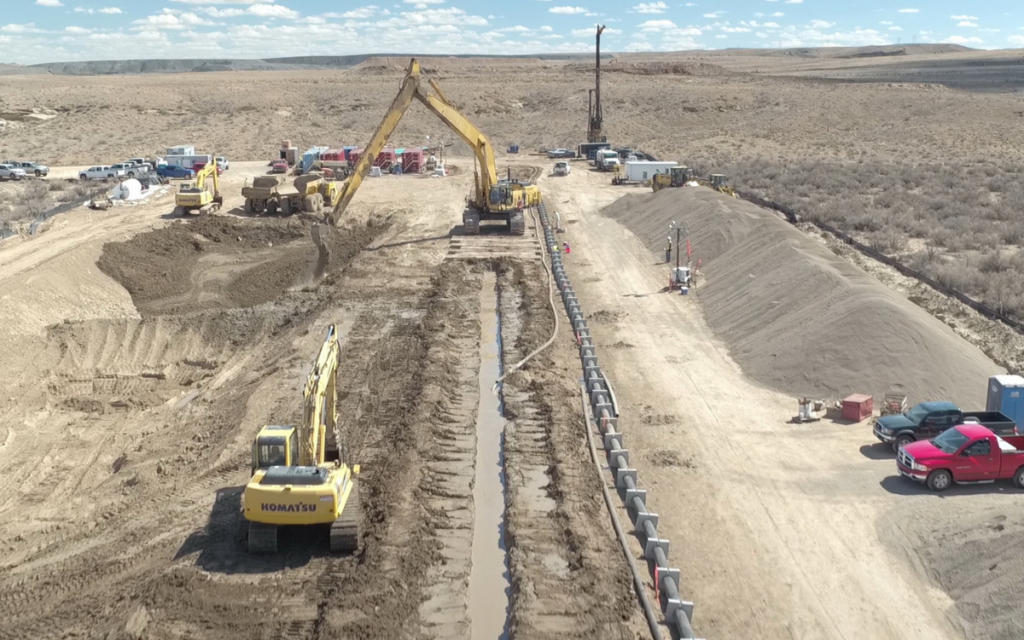
Groundwater Control
Groundwater control refers to methods that address seepage, hydraulic pressure, and subsurface water movement that affect excavation safety and structural performance. Cutoff walls and deep drains are common solutions used to manage groundwater in complex site conditions.
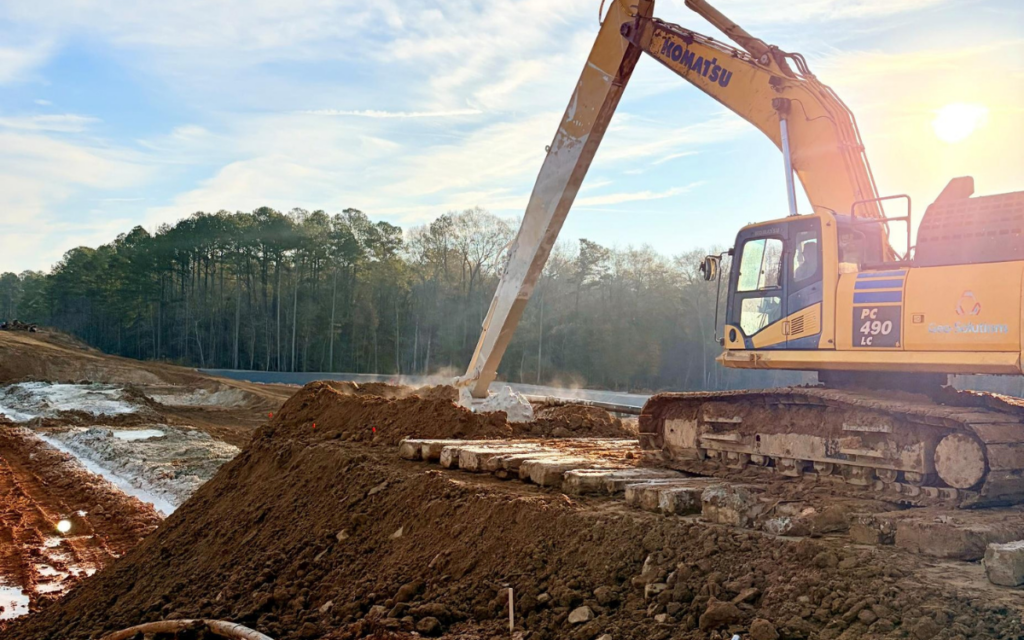
Environmental Remediation
Environmental remediation refers to methods for isolating, stabilizing, and treating contaminated soil, sediment, and groundwater. In situ stabilization and solidification performed using soil mixing is a common environmental remediation approach.
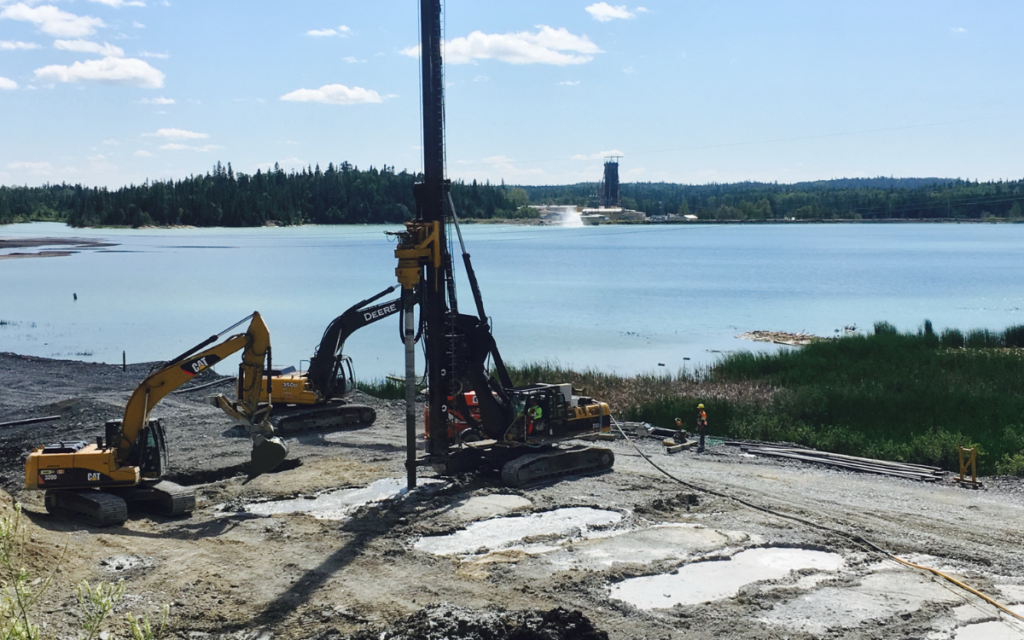
Ground improvement
Ground improvement refers to methods used to improve (often strengthen) weak, compressible, variable, or undesirable soils for specific performance enhancement. Soil mixing and rigid inclusions are common ground improvement solutions used to control settlement and improve subsurface behavior.
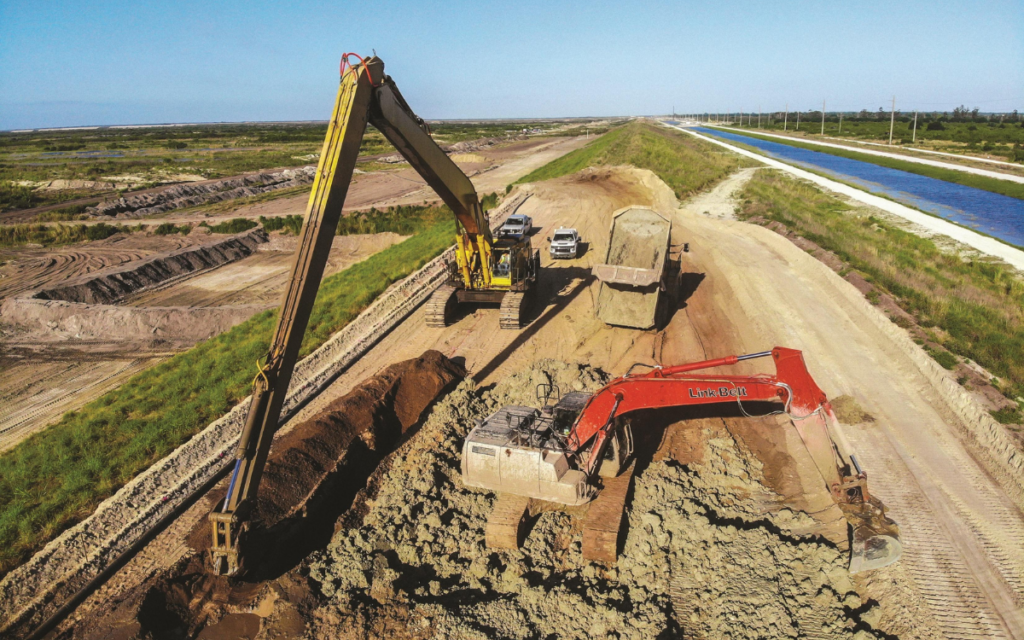
slurry trenching (walls)
Slurry trenching refers to a method of installing deep, narrow structures in the subsurface without the need for conventional excavation support or dewatering. The technique relies on a slurry, an engineered fluid that is often bentonite clay mixed with water, to balance the lateral earth pressure of the soils.
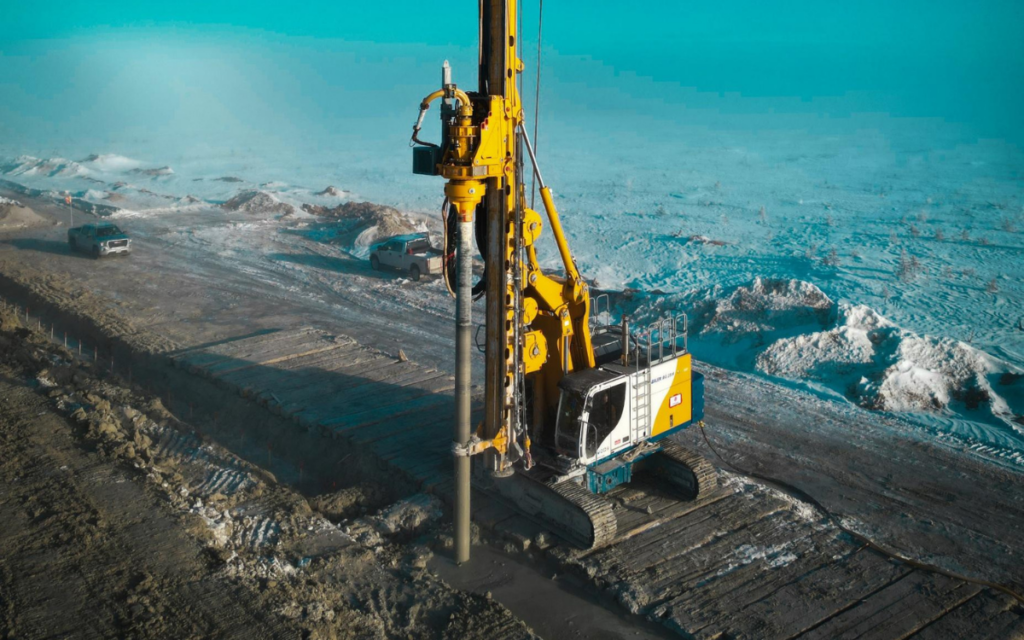
Soil Mixing
Soil mixing refers to various methods used to blend in situ soils with reagents to improve the soil properties relative to the soils alone. Soil mixing can be used to solve a variety of geotechnical and environmental problems.
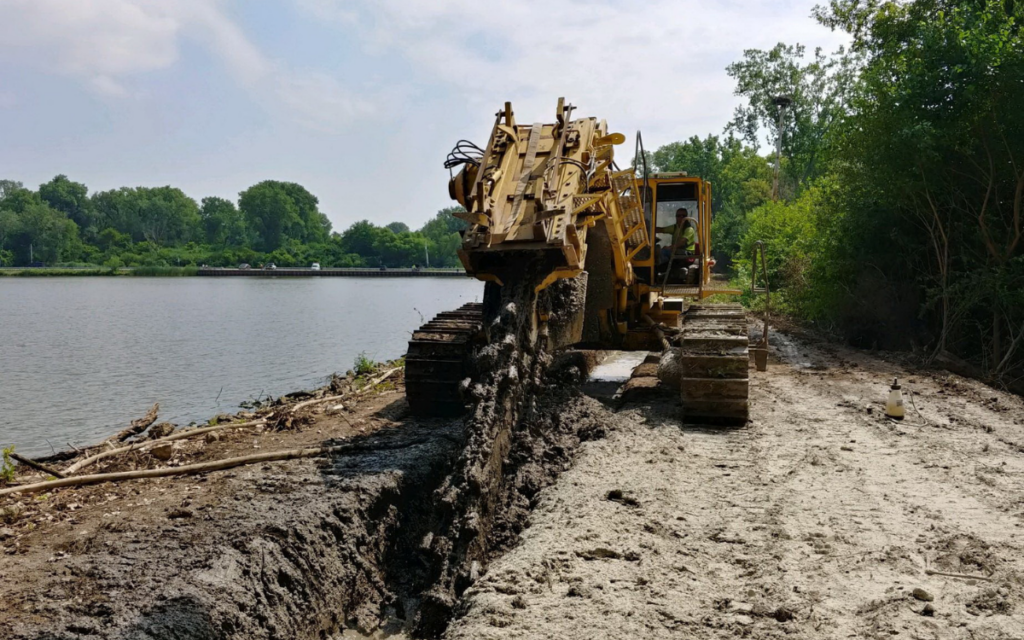
Trencher (Continuous Trenching, Chain Mixing)
GSI’s trenchers, also referred to by the term chain mixers, are specialized pieces of equipment designed for constructing deep and narrow cutoff walls performed using a method of in-situ soil mixing.