
Environmental Remediation
Comprehensive solutions for soil and groundwater contamination
overview environmental remediation
Environmental remediation involves the removal, treatment, or containment of contaminants in soil and groundwater to restore sites to safe and compliant conditions. Geo-Solutions provides specialized services for complex remediation projects, integrating its geotechnical and environmental expertise.
Some of Geo-Solutions’ core construction techniques, like slurry trenching and soil mixing, are key components of many site remediations. These methods are often combined with in-situ stabilization and solidification, chemical treatment, or other methods to immobilize or neutralize hazardous substances.
In addition to its core technologies, Geo-Solutions performs other general site cleanup activities. These include excavation, transportation and disposal, subsurface demolition, dewatering, drainage channel construction, and site restoration. This comprehensive approach ensures regulatory compliance and long-term site stability.
Key benefits
- Ability to manage full site cleanup, including demolition and restoration
- Experienced team with a track record of successful project delivery
- Integrated solutions for soil and groundwater contamination
- Deep expertise in key techniques, e.g. slurry trenching and soil mixing for remediation
applications
- Manufactured Gas Plant (MGP) Sites: In-situ solidification or excavation of coal tar impacted soils
- Industrial Facilities: Treatment of soils contaminated with chemicals or heavy metals
- Energy and Utility Sites: Stabilization of coal combustion residuals and related materials
- Brownfield Redevelopment: Cutoff walls, site preparation, and remediation for future construction
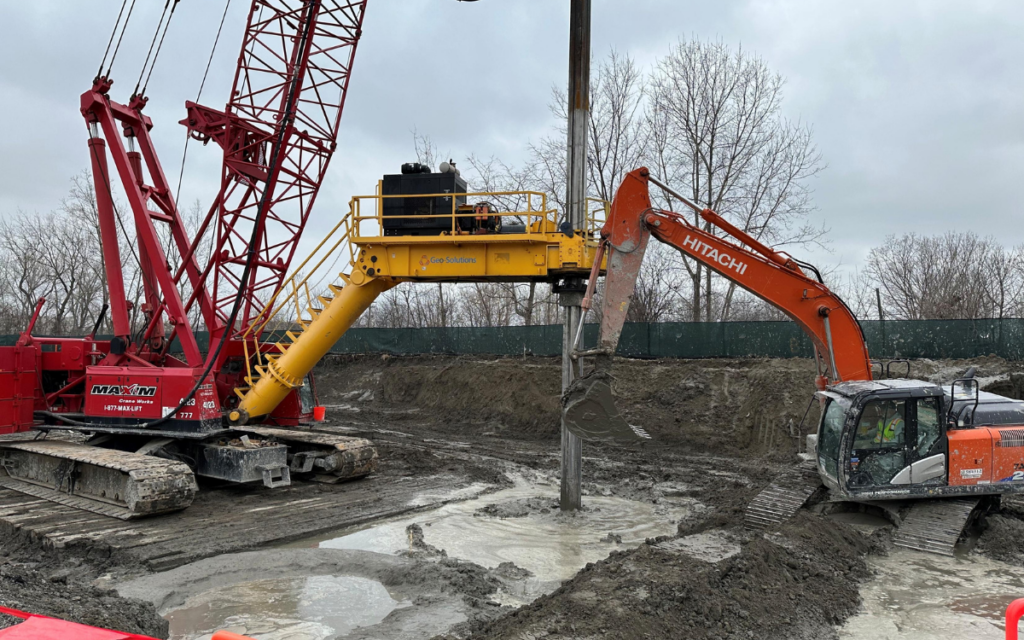
stabalization / solidification
Stabilization and solidification refer to methods of reducing contaminant immobility by either chemically binding the contaminant or by locking the contaminant in a low-permeability monolith. In environmental remediation, this is often accomplished in-place via soil mixing and referred to as in situ stabilization / solidification (ISS).
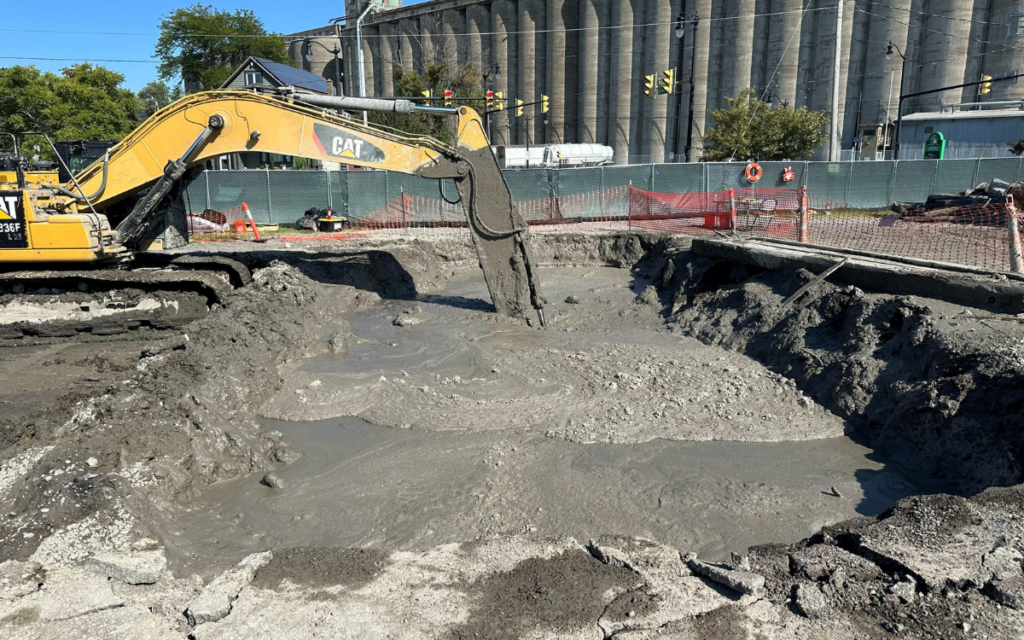
In Situ Treatment
In situ treatment refers to methods that treat contaminated soils directly in place without excavation or stabilization / solidification. Soil mixing performed with oxidants (ISCO) or reducing agents (ISCR) are common forms of in situ treatment.
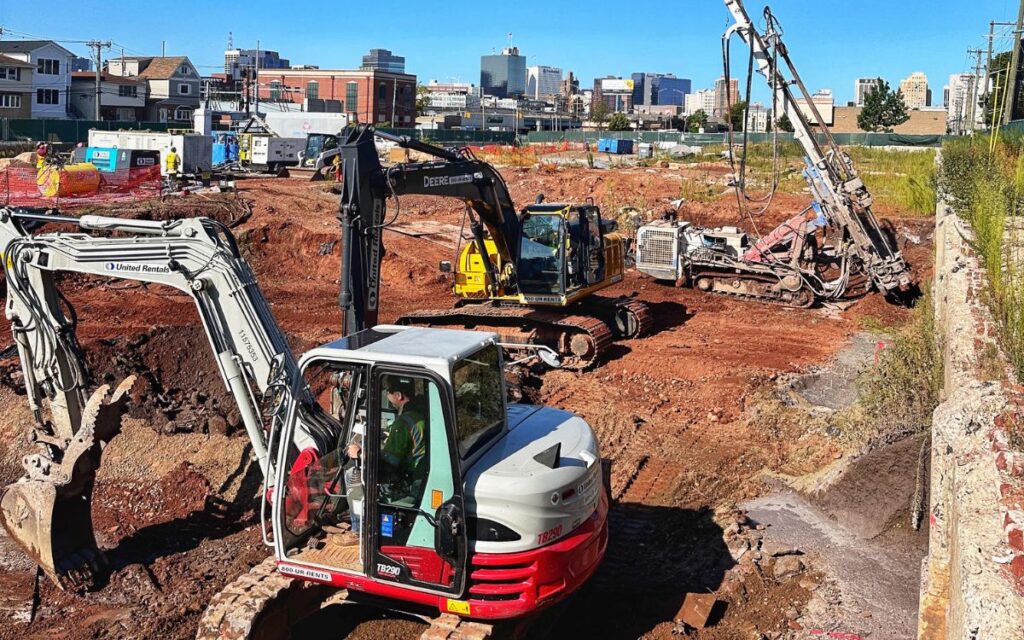
Excavation & Removal
Remedial excavation refers to the targeted removal of contaminated or unsuitable soils. Excavation can be performed using conventional excavators or using large diameter augers (LDA).
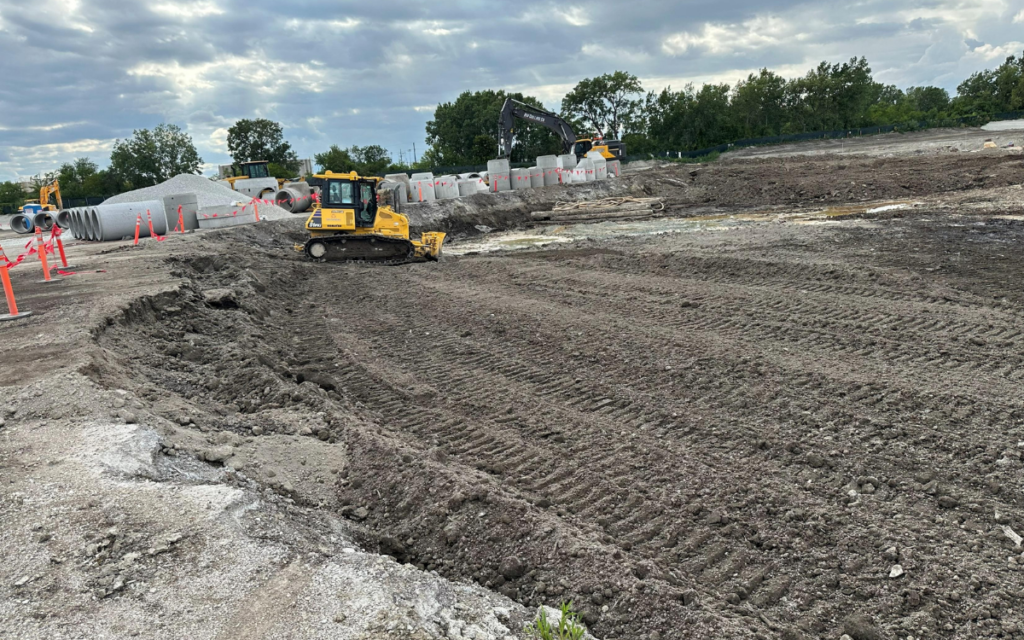
traditional earthwork
Traditional earthwork refers to excavation, grading, and material handling activities that support construction and remediation. Excavators, dozers, and haul equipment are commonly used in earthwork operations.
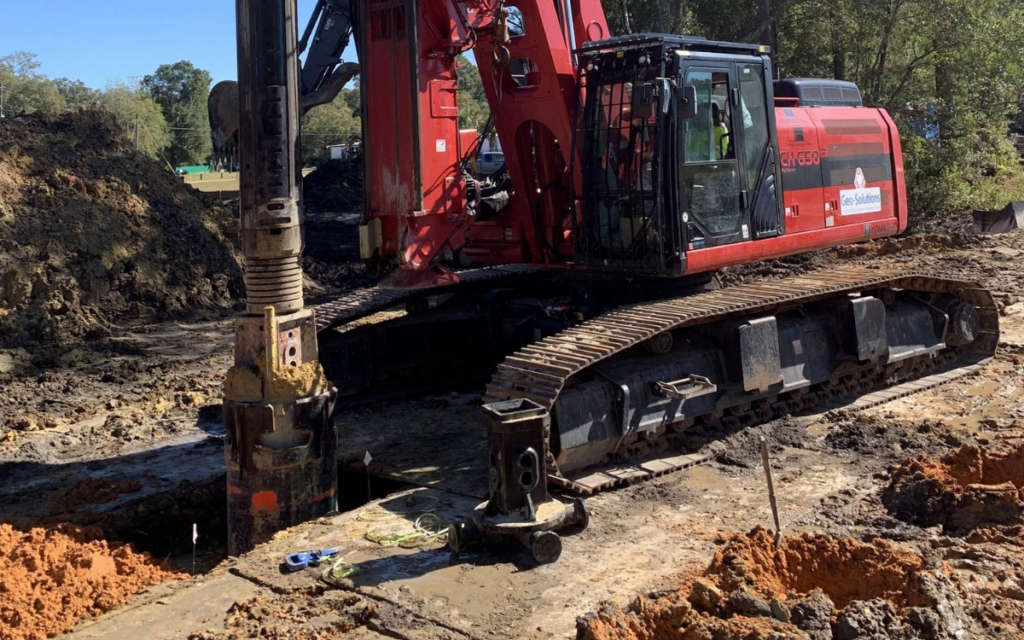
Auger Excavation (LDA)
Large‑diameter auger excavation refers to a controlled excavation method using oversized augers. LDA systems are commonly used where access is limited preventing the use of a more conventional excavation approach.
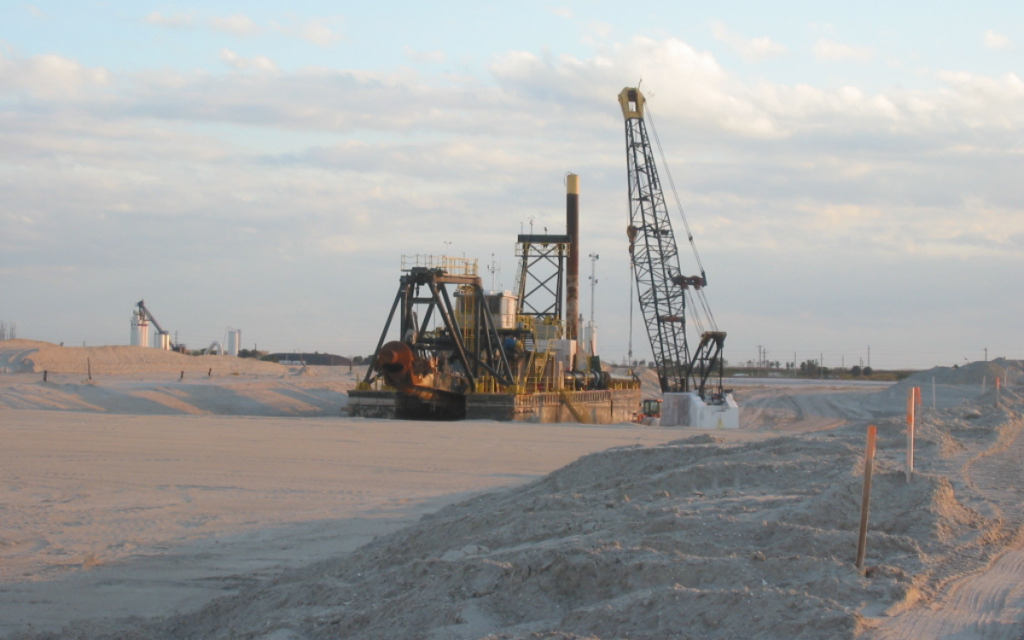
dredging
Dredging refers to the removal of sediments from waterways to support remediation or construction. Dredging can be performed from a barge in the water or from the shoreline.
Environmental Remediation
Case Studies
Our environmental remediation case studies demonstrate our ability to design and implement effective solutions for a range of projects. Take a look at some of our notable successes.