
Slope Stability (Shear Walls)
Soil-mixed shear walls, slurry trenching, and jet grouting to prevent slope movement and protect infrastructure.
Slope Stability (Shear Walls)
Slope stability shear walls are engineered ground improvement and earth retention elements installed perpendicular to the direction of potential sliding to intercept shallow failure planes and increase overall stability factors of safety. In Geo Solutions’ practice, shear walls are commonly formed by soil mixing (deep or shallow) to create continuous soil cement panels or columns that act as subsurface “fins,” resisting downslope movement.
Where slopes are influenced by groundwater and seepage, slurry trenching (cutoff walls) can be introduced upslope or at the toe to reduce pore pressures and control water migration, which is often a key driver of instability. Slurry trench walls include soil bentonite, cement bentonite, and soil cement bentonite backfills, selected to balance permeability, strength, and constructability.
In constrained or utility dense corridors where access or obstructions limit tooling, jet grouting provides a flexible option to form localized high strength, low permeability columns or panels—stand alone or stitched to soil mixed or slurry wall segments—to complete a continuous shear resistant system.
key benefits
- Intersects shallow failure planes to raise global stability and reduce deformation along slopes and embankments.
- Controls groundwater via low permeability slurry walls or jet grouted elements, lowering pore pressures that contribute to instability.
- Adaptable to access constraints (utilities, narrow ROWs, sensitive structures) using jet grouting and varied soil mix tooling
- Constructible in soft or variable ground with a range of reagents and methods (SB/CB/SCB slurries; deep/shallow mixing).
- Cost and schedule efficient vs. full reconstruction, often avoiding extensive excavation, dewatering, or mass replacement.
applications
- Transportation embankments & roadway cuts: Stabilize slopes, widen corridors, or prepare for new loads.
- Riverbanks, levees, and waterfront margins: Improve factors of safety and mitigate seepage driven instability.
- Hillside development & utility corridors: Install shear walls around existing utilities and structures with minimal vibration.
- Remediation & redevelopment sites: Combine stability improvement with containment where contaminants or soft soils are present.
foundation and shoring
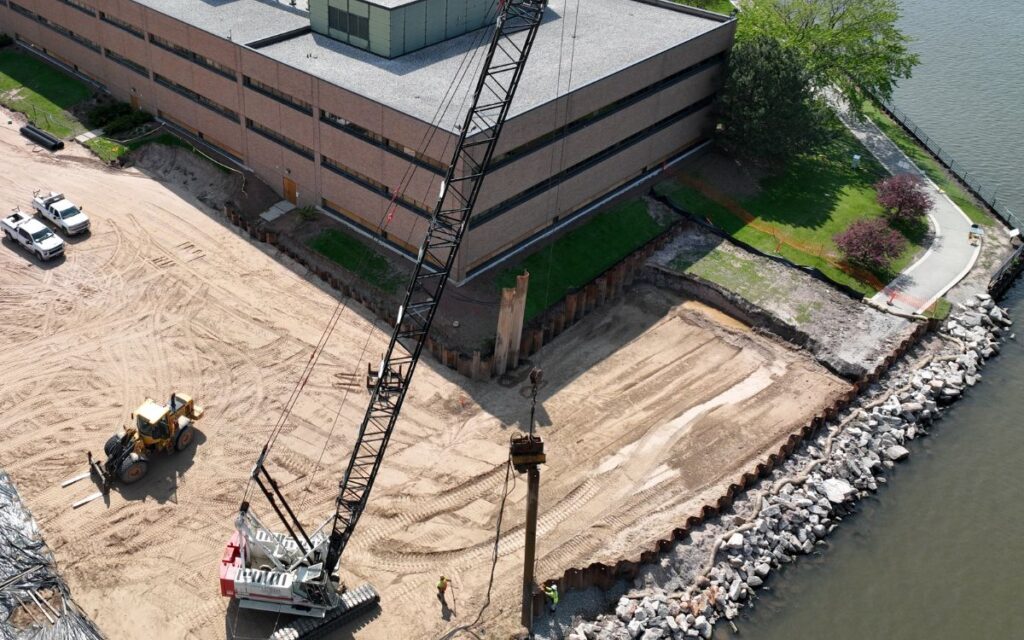
Foundations and shoring refer to systems used to support excavations and structures in difficult ground or groundwater conditions with elements that do not rely heavily on the soil. Auger cast piles are a common deep foundation technology and secant pile walls are a common earth retention technology.
preconstruction services
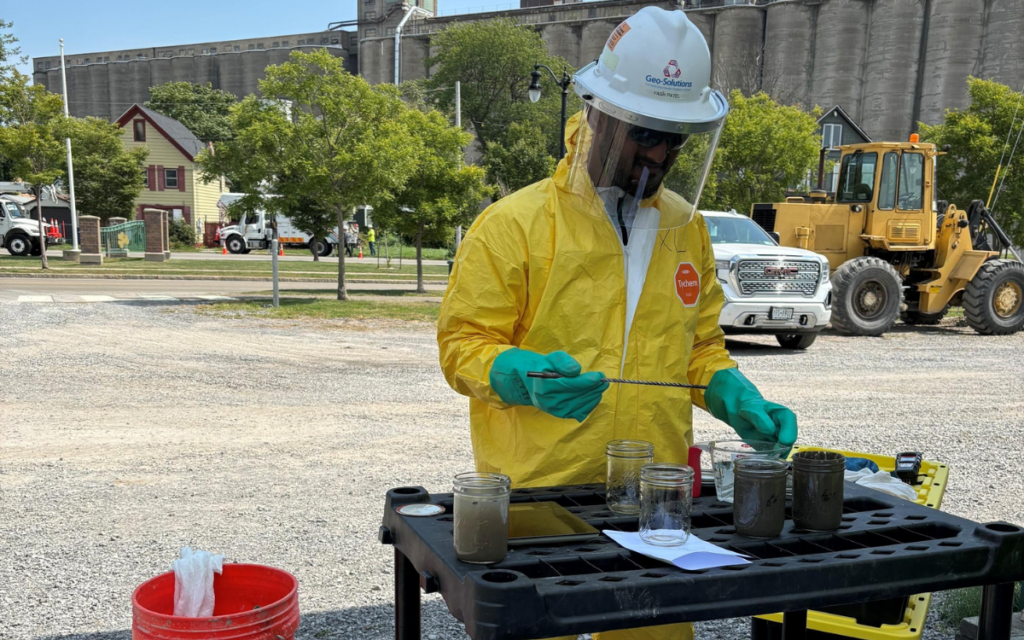
Preconstruction services refer to early‑stage contractor involvement to address constructability components to inform project planning. Bench scale studies, constructability reviews, and pilot programs are commonly used to support design and solution selection.
Ground improvement
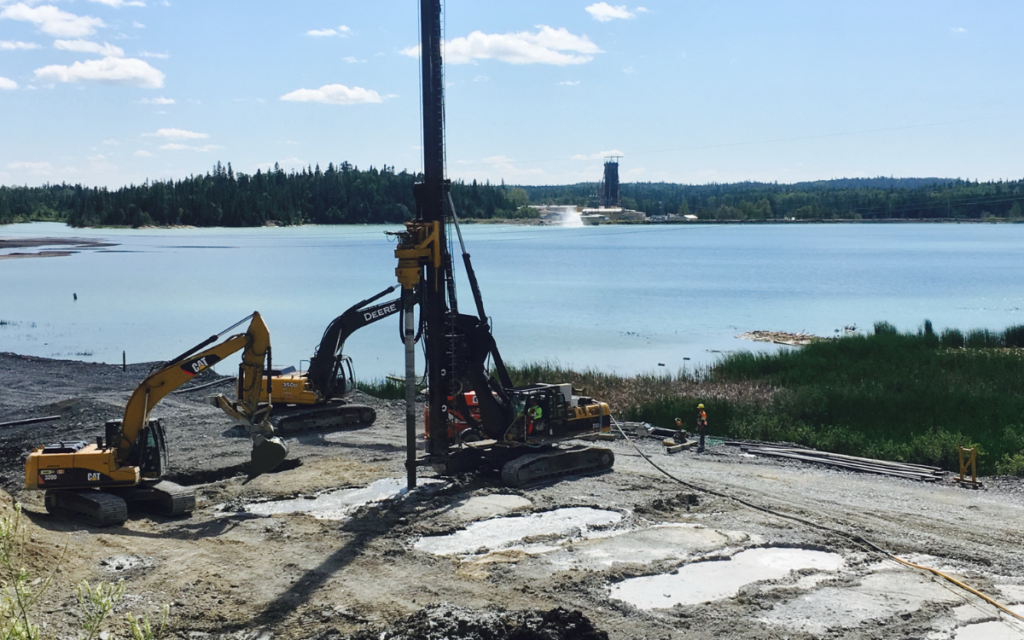
Ground improvement refers to methods used to improve (often strengthen) weak, compressible, variable, or undesirable soils for specific performance enhancement. Soil mixing and rigid inclusions are common ground improvement solutions used to control settlement and improve subsurface behavior.
soil mixing
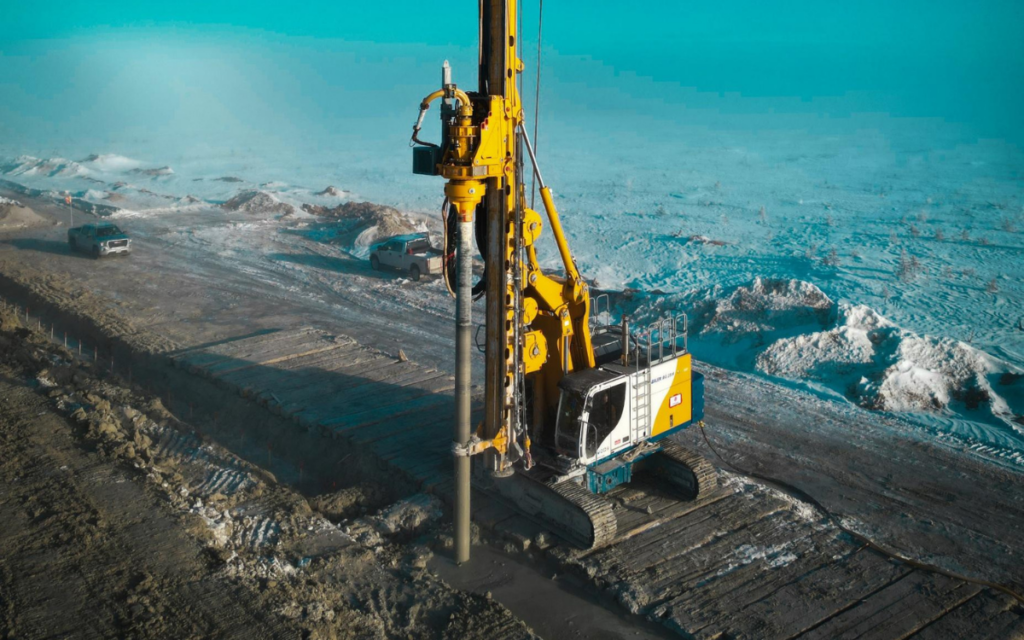
Soil mixing refers to various methods used to blend in situ soils with reagents to improve the soil properties relative to the soils alone. Soil mixing can be used to solve a variety of geotechnical and environmental problems.
jet grouting
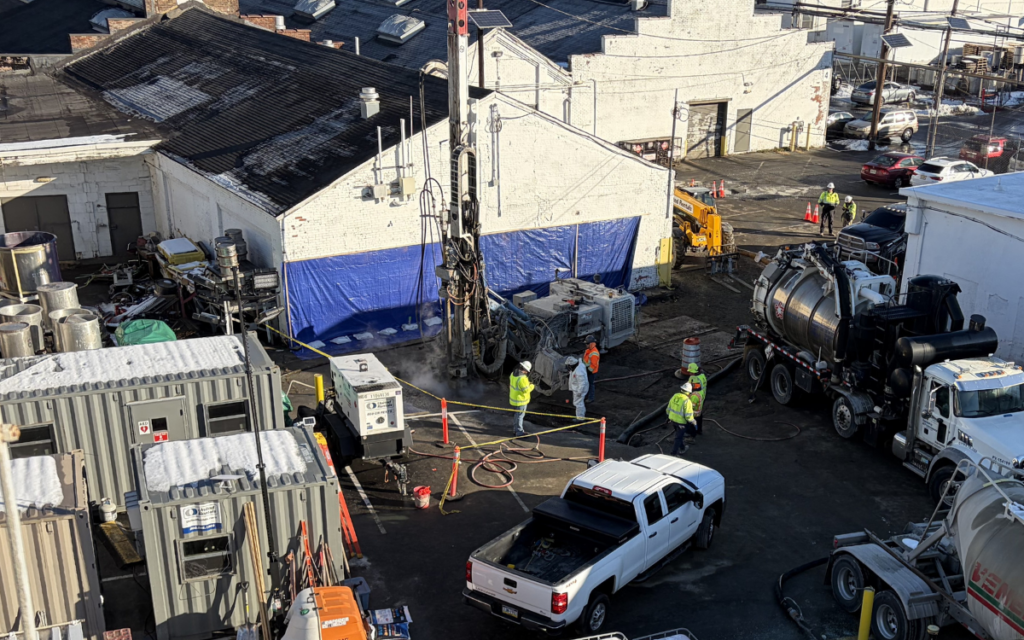
Jet grouting is a blend of grouting and soil mixing where the soils are mixed with a grout using a high‑pressure fluid stream to create soil‑cement columns or panels. Jet grouting is a great tool for accomplishing stabilization or solidification in tight access areas, when discrete vertical treatment is required, or where there are subsurface or overhead utilities.
slurry trenching
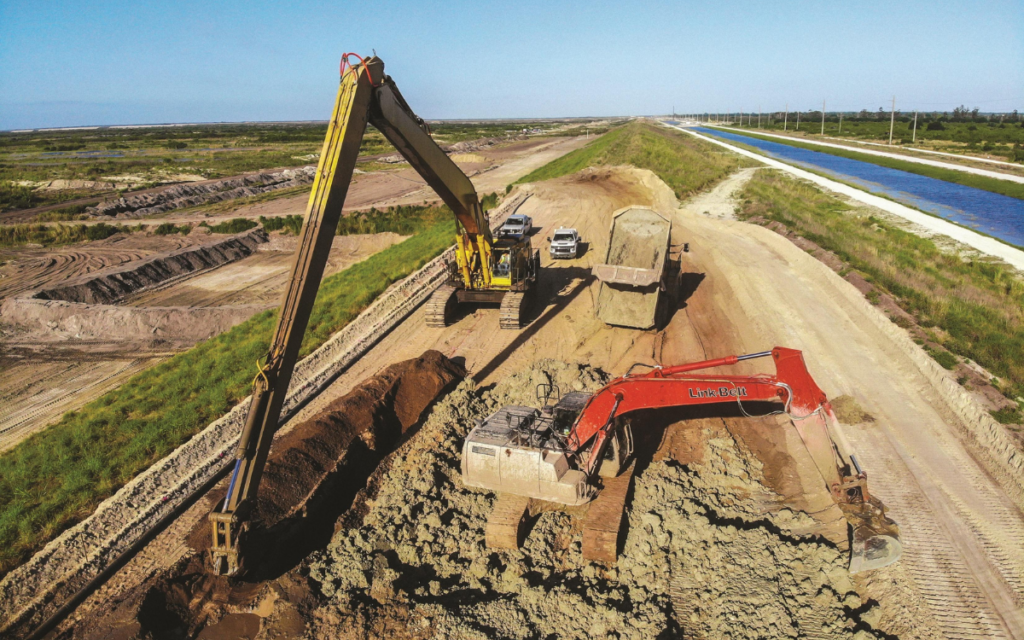
Slurry trenching refers to a method of installing deep, narrow structures in the subsurface without the need for conventional excavation support or dewatering. The technique relies on a slurry, an engineered fluid that is often bentonite clay mixed with water, to balance the lateral earth pressure of the soils.