
Grouting
Subsurface void filling and ground stabilization using cementitious mixtures
Overview of grouting
Grouting is a geotechnical construction method used to fill subsurface voids with fluid mixtures, typically cementitious materials combined with water and additives to keep the cementitious materials suspended. The process improves ground stability, reduces permeability, and mitigates risks associated with voids or weak soils.
The technique involves installing a hollow casing to the target depth, then injecting grout as the casing is withdrawn. Injection continues until a pressure increase indicates voids are filled or until a volume threshold is achieved. Grouting can be applied as a stand-alone solution or integrated with soil mixing and slurry trenching to address complex subsurface conditions.
Geo-Solutions has applied grouting technologies since the late 1980s to solve geotechnical and environmental challenges. The company offers multiple grouting methods, including permeation, compaction, pipe/void filling, and jet grouting for columnar soil-grout elements.
Key benefits
- Reduces soil permeability and improves stability
- Mitigates sinkhole development and subsurface settlement
- Enables structural underpinning and foundation rehabilitation
- Compatible with other ground improvement techniques
- Adaptable to varied soil conditions and project constraints
Applications
- Dam Foundations: Seepage control and foundation strengthening using monitored grout injection systems
- Pipelines and Tunnels: Void filling for abandoned pipes, tunnels, and mine shafts
- Ground Improvement: Compaction grouting for densifying loose soils under structures
- Environmental Remediation: Combined with soil mixing or slurry walls for containment systems
- Urban Infrastructure: Jet grouting for underpinning and excavation support in restricted-access areas
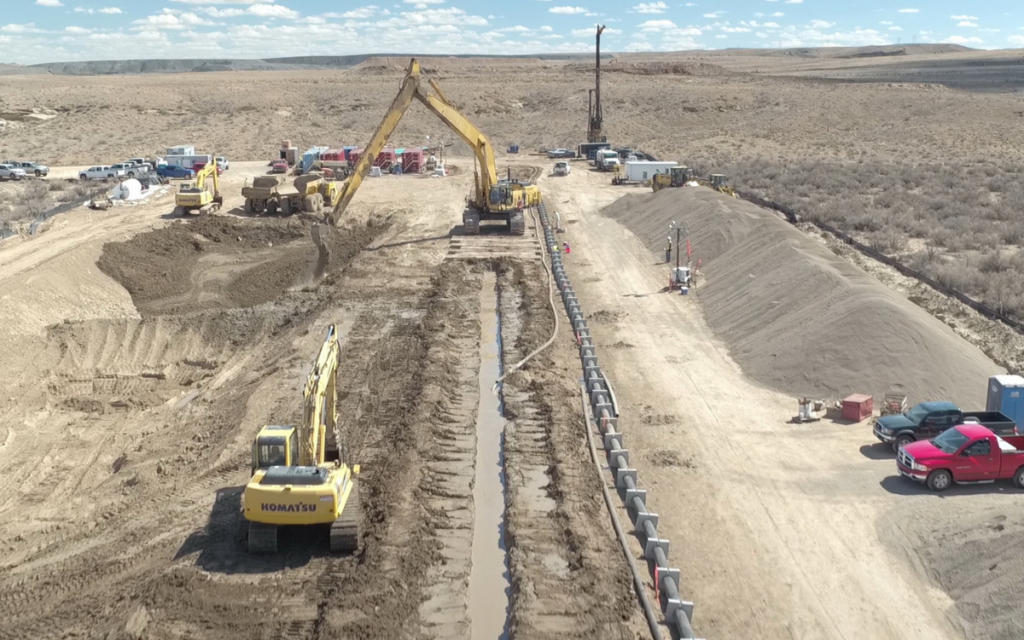
Groundwater Control
Groundwater control refers to methods that address seepage, hydraulic pressure, and subsurface water movement that affect excavation safety and structural performance. Cutoff walls and deep drains are common solutions used to manage groundwater in complex site conditions.
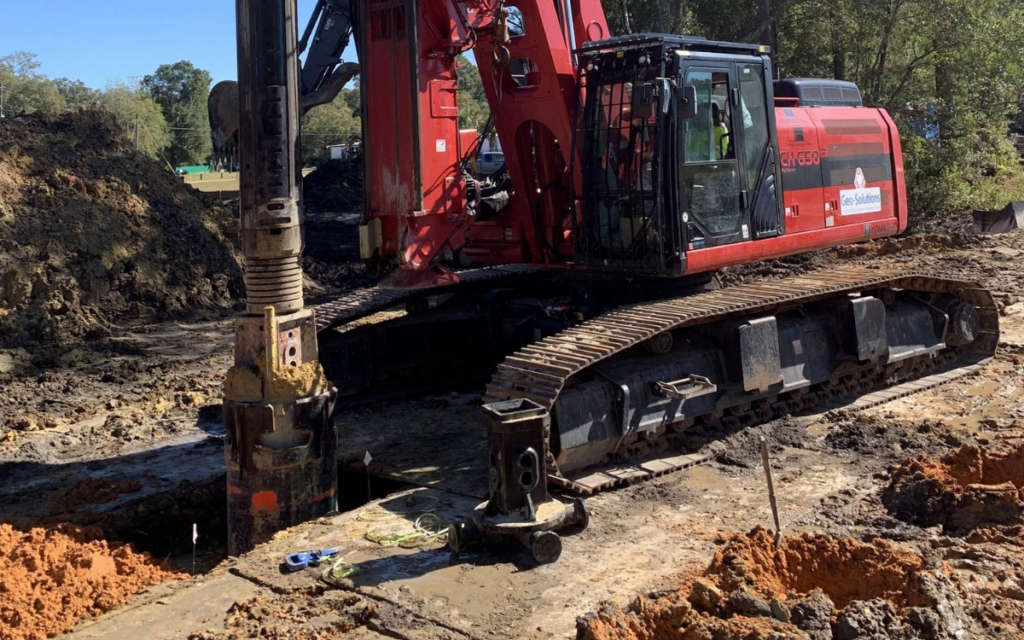
Foundations & Shoring
Foundations and shoring refer to systems used to support excavations and structures in difficult ground or groundwater conditions with elements that do not rely heavily on the soil. Auger cast piles are a common deep foundation technology and secant pile walls are a common earth retention technology.
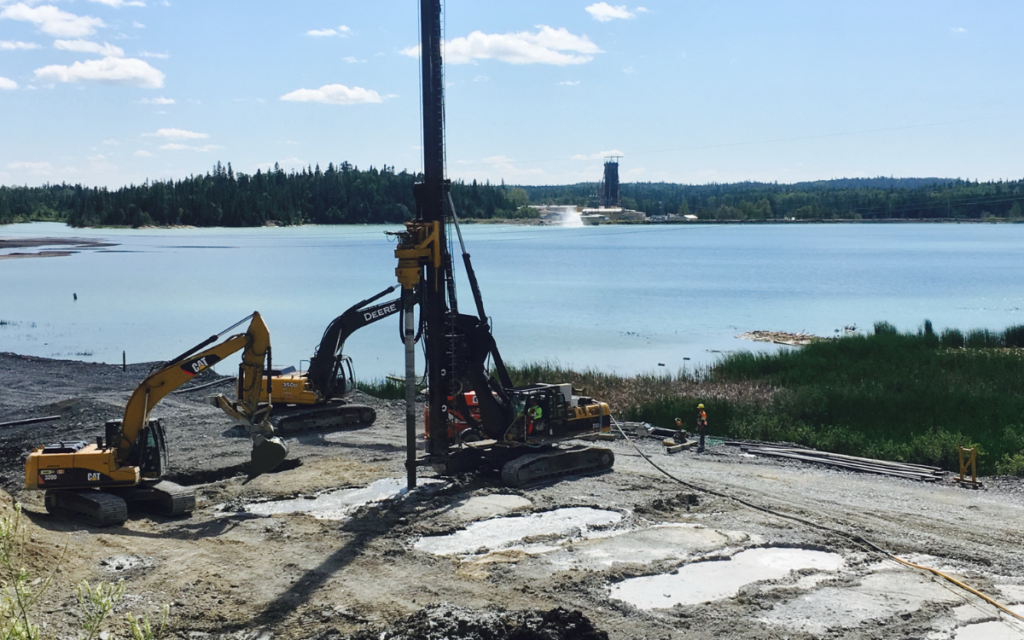
Ground improvement
Ground improvement refers to methods used to improve (often strengthen) weak, compressible, variable, or undesirable soils for specific performance enhancement. Soil mixing and rigid inclusions are common ground improvement solutions used to control settlement and improve subsurface behavior.
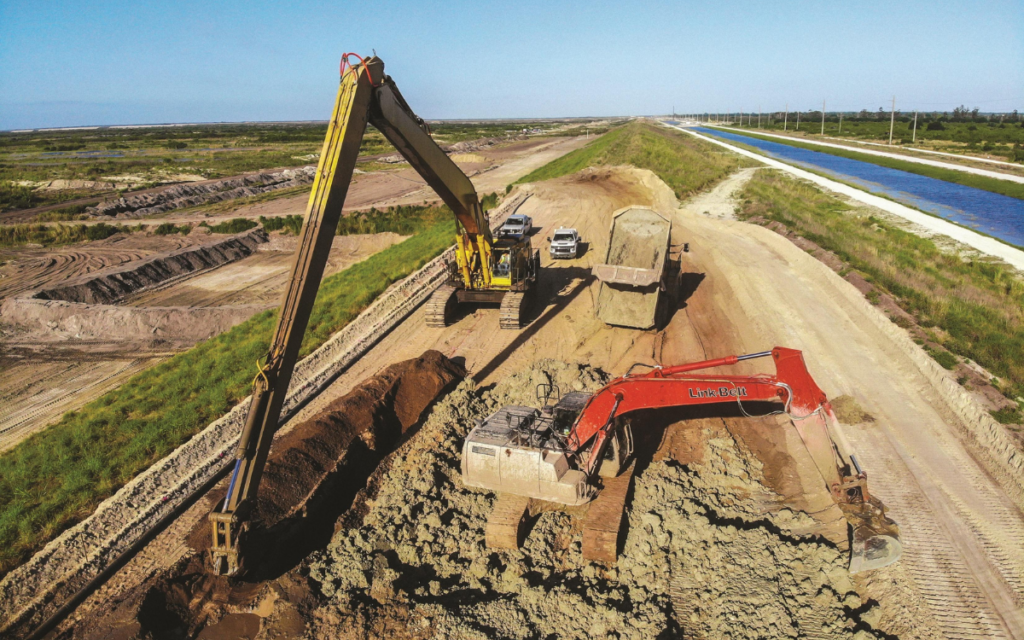
slurry trenching (walls)
Slurry trenching refers to a method of installing deep, narrow structures in the subsurface without the need for conventional excavation support or dewatering. The technique relies on a slurry, an engineered fluid that is often bentonite clay mixed with water, to balance the lateral earth pressure of the soils.
Stabilization / Solidification
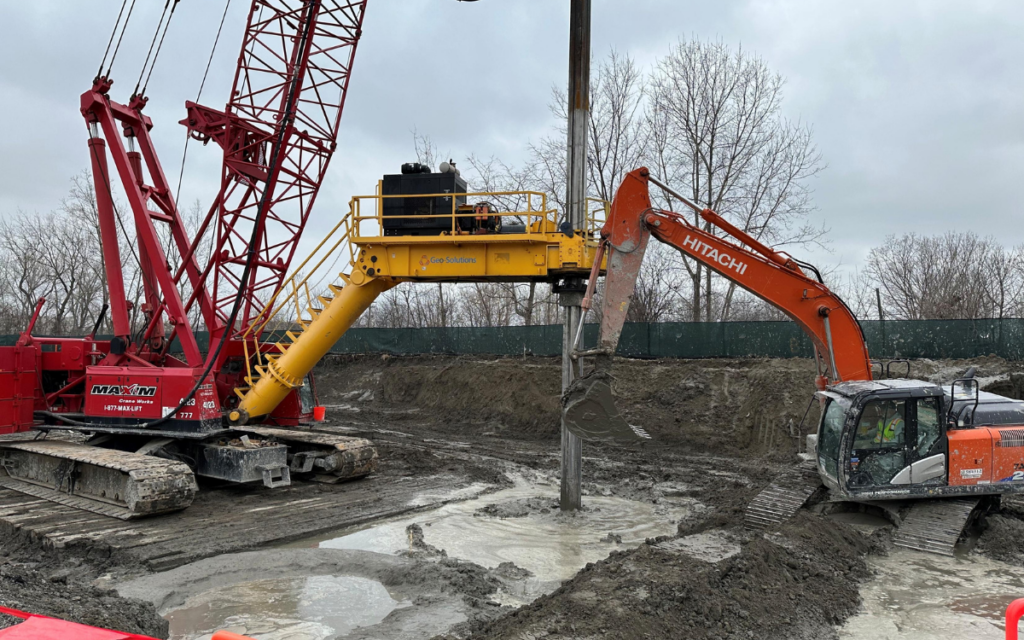
Stabilization and solidification refer to methods of reducing contaminant immobility by either chemically binding the contaminant or by locking the contaminant in a low-permeability monolith. In environmental remediation, this is often accomplished in-place via soil mixing and referred to as in situ stabilization / solidification (ISS).
cutoff walls
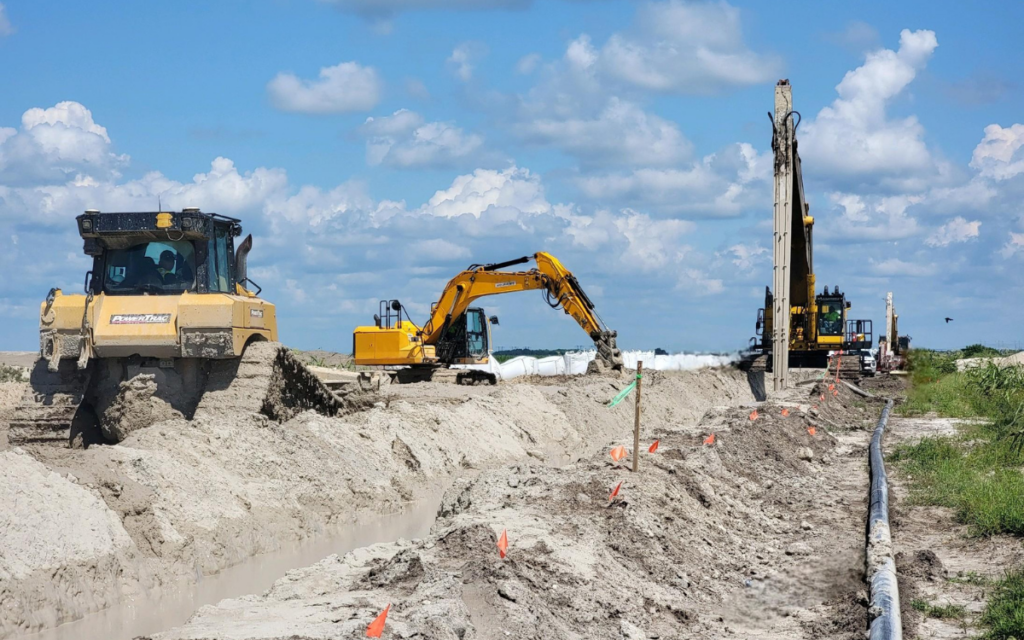
Cutoff walls are low permeability vertical elements installed in the subsurface to control horizontal groundwater flow and limit contaminant migration. Common technologies for installing cutoff walls include slurry trenching and soil mixing.