
Funnel & Gate
Passive in situ groundwater collection and treatment systems for plume capture and long term remediation.
Overview of funnel & gate
The Funnel and Gate approach is a specialized application of Permeable Reactive Barrier (PRB) technology used to passively collect and treat contaminated groundwater. In these systems, low permeability cutoff walls (the funnel) are installed to intercept and direct groundwater flow toward high permeability treatment zones (the gate), where contaminants are removed as groundwater flows naturally through reactive media. These systems operate without active pumping, relying instead on existing hydraulic gradients.
Funnel and Gate systems are designed so that the length, orientation, and configuration of the funnel walls capture the impacted groundwater plume. The gate is engineered with specific hydraulic and chemical properties to ensure adequate residence time and effective treatment. Gates often contain zero valent iron (ZVI) or other reactive or adsorptive materials selected based on site specific contaminants and groundwater chemistry.
Geo Solutions is uniquely positioned to assist designers when developing Funnel and Gate systems because it offers constructability expertise in multiple installation techniques—including slurry trenching with bentonite or polymers, soil mixing, jet grouting, and other specialty construction methods. This versatility allows Geo Solutions to tailor the system to complex site conditions, variable geology, and high groundwater environments where conventional methods are impractical.
Key Benefits
- Passive system operation, eliminating long term pumping and energy use
- Effective plume capture and control using engineered cutoff wall geometry
- Targeted treatment zones, reducing the volume of reactive material required
- Long term remediation performance with minimal maintenance
- Adaptable to complex site conditions, including deep groundwater and active facilities
- Compatible with a wide range of reactive and adsorptive media
Applications
- Groundwater Plume Control: Interception and treatment of dissolved contaminant plumes
- Chlorinated Solvent Sites: ZVI based reduction of VOC impacted groundwater
- Industrial & Brownfield Sites: Passive remediation beneath active or redeveloped properties
- Landfills & Waste Facilities: Long term groundwater treatment and migration control
- Infrastructure Corridors: Applications where surface access and disturbance must be minimized
- Source Area or Downgradient Control: Placement at plume fronts or adjacent to source zones
polymer trenching
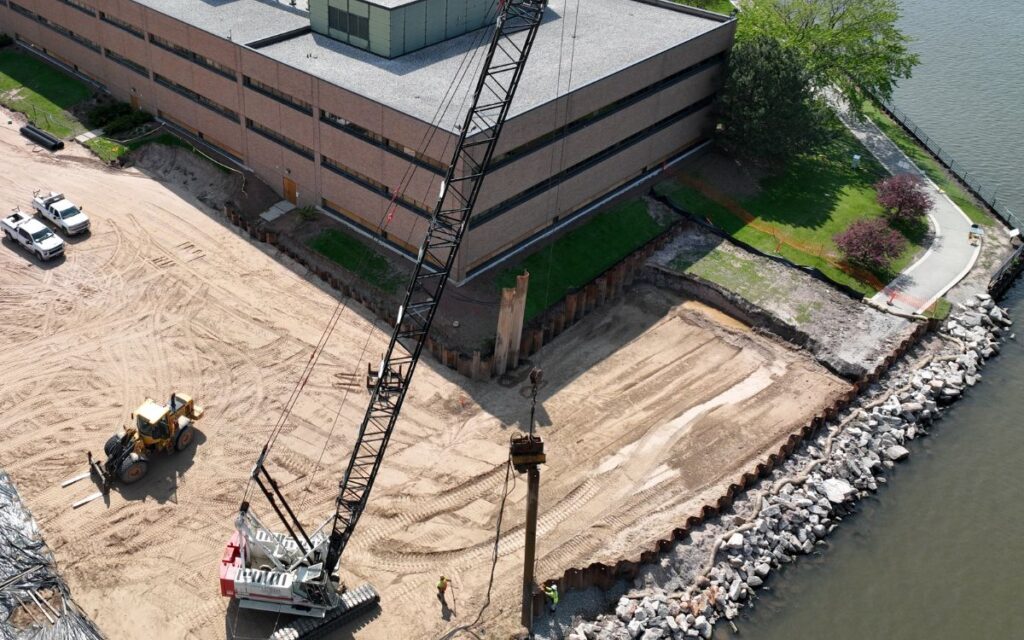
Polymer trenching techniques can be used to construct shallow drainage or collection features that connect to deep drain systems. These low permeability or drainage trenches help intercept groundwater and direct flow toward deep vertical or inclined drainage elements, improving overall system efficiency and long term performance.
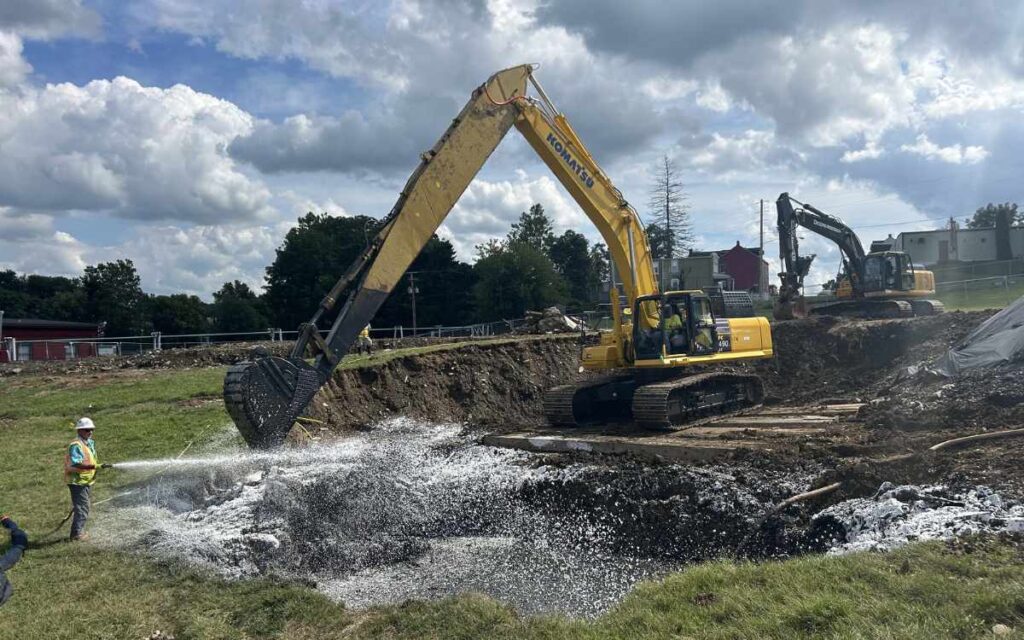
Bio polymer slurry trenching is a primary installation method for PRBs. Vertical trench walls are supported using an engineered, biodegradable slurry, allowing deep excavation without dewatering or internal shoring. Reactive media, gravel backfill, filter fabric, and collection elements are placed through the slurry, which is later degraded to fully develop a permeable reactive treatment zone.
slurry trenching (walls)
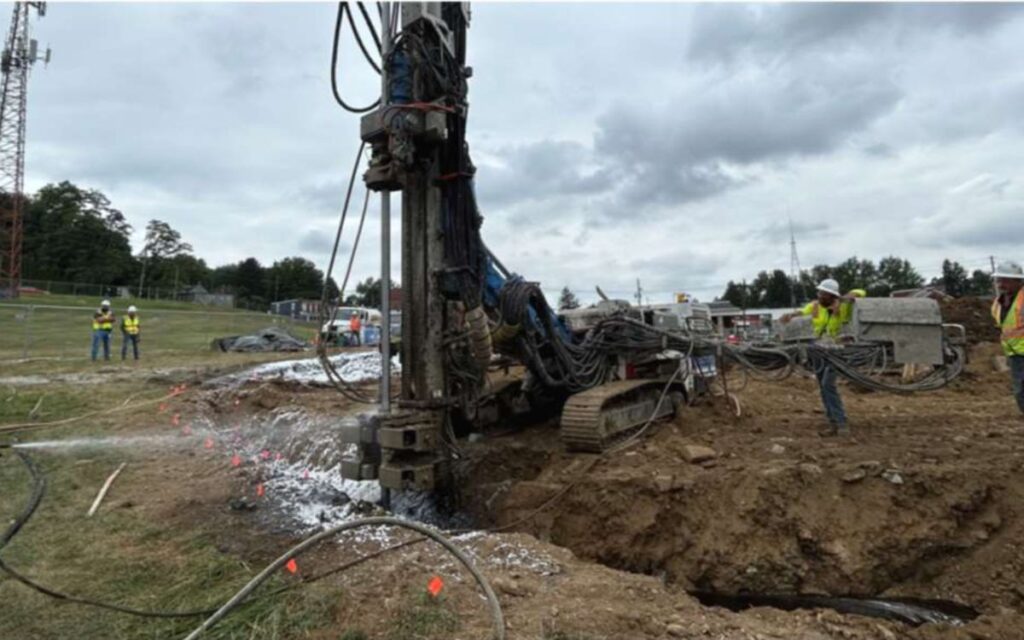
Slurry trench cutoff walls serve as the primary “funnel” component of Funnel and Gate systems. These low permeability barriers intercept and redirect groundwater flow toward designated gate locations, preventing contaminants from bypassing the treatment zone. Slurry trenching allows construction of vertical barriers to significant depths and can be performed in a wide range of soil types, including sands, silts, clays, and mixed fill.
In Funnel and Gate applications, slurry trench walls are designed to create controlled hydraulic pathways. The length, orientation, and penetration depth of the funnel walls are engineered based on groundwater flow direction, plume geometry, and site hydrogeology. This ensures that the contaminated groundwater is efficiently captured and directed through the gate rather than migrating around the system.
Slurry trenching is especially valuable for sites requiring long term passive control, where structural stability, durability, and minimal maintenance are essential design criteria.
vibrated beam
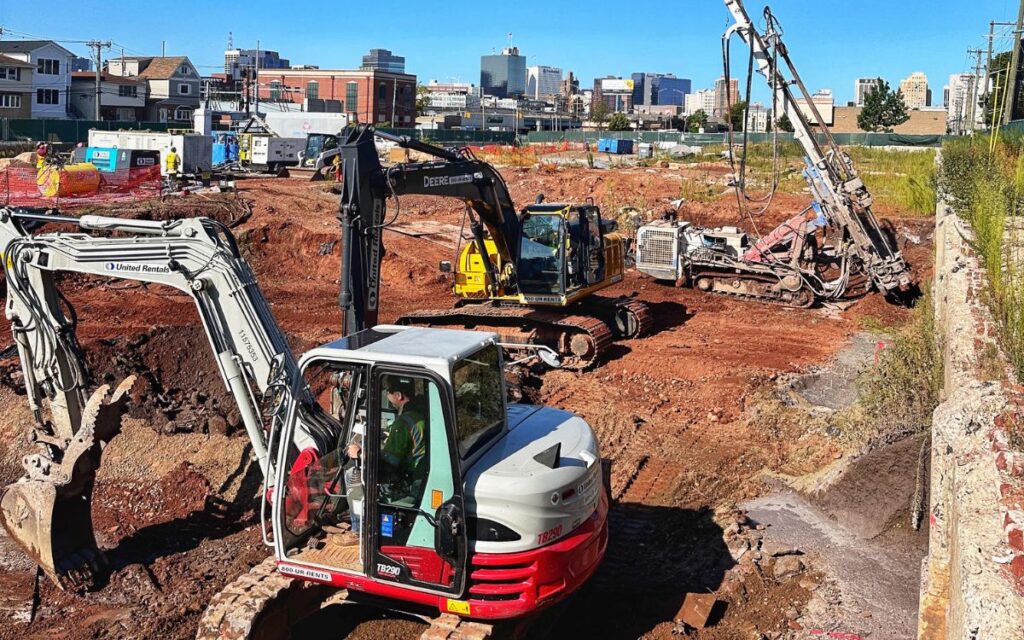
Vibrated beam cutoff wall technology can be used to construct narrow, continuous low permeability barriers that support groundwater flow control in Funnel and Gate systems. This method is particularly effective where space constraints, proximity to infrastructure, or alignment tolerances make conventional trenching difficult.
In Funnel and Gate configurations, vibrated beam walls can be used to install the primary or secondary funnel elements. Their narrow profile allows installation close to buildings, utilities, or other sensitive site features while still providing effective hydraulic control.
Vibrated beam systems can be installed rapidly and with minimal surface disruption, making them well suited for urban, industrial, and redevelopment sites where maintaining site access and minimizing environmental impact are critical.
preconstruction services
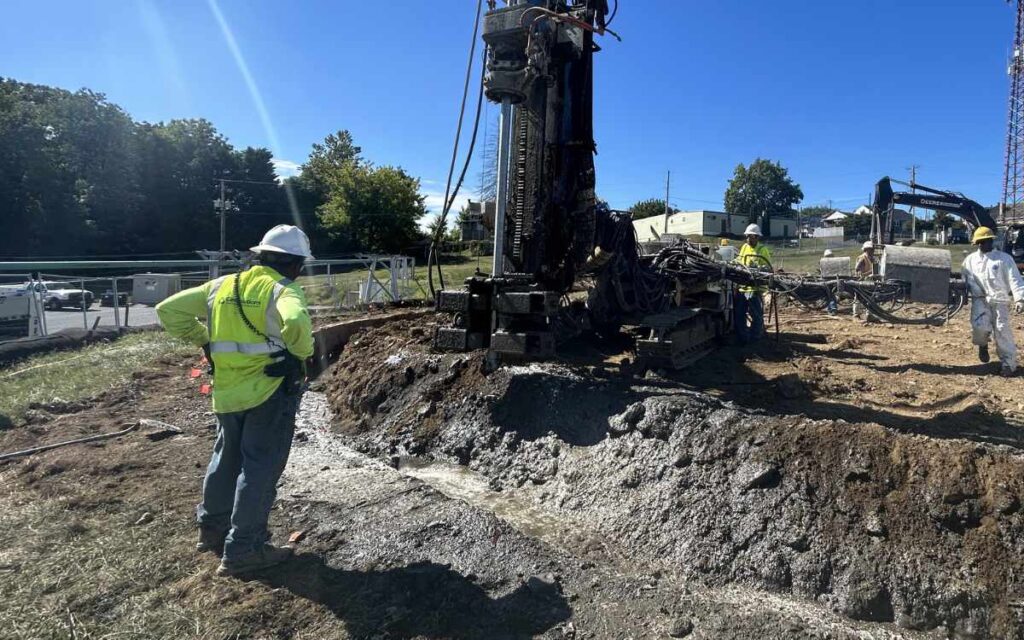
Funnel and Gate systems are often implemented as part of preconstruction or early phase site development strategies. Installing the system prior to building construction or redevelopment allows groundwater contamination to be addressed without delaying future work or exposing construction personnel to impacted groundwater.
Early implementation improves predictability of site conditions, reduces long term liability, and allows future foundations, utilities, and infrastructure to be constructed with reduced groundwater risk. Funnel and Gate systems are especially advantageous for sites where conventional remediation would interfere with development schedules or require long term active management.
environmental remediation
As an environmental remediation solution, Funnel and Gate systems offer a proven, long term approach for managing contaminated groundwater plumes. Reactive or adsorptive gate media are selected based on contaminant type, groundwater chemistry, and desired treatment mechanisms, allowing effective treatment of chlorinated solvents, hydrocarbons, and dissolved metals.
Because treatment is localized within the gate, Funnel and Gate systems are highly efficient compared to continuous PRBs or pump and treat systems. The passive nature of the system minimizes energy use and allows remediation to proceed over decades if necessary, making it well suited for sites requiring extended remedial timeframes or institutional controls.
This approach is frequently used to contain plumes, prevent downgradient migration, and protect receptors, supporting regulatory compliance and risk reduction objectives.
groundwater control
Funnel and Gate systems provide a highly effective means of groundwater control by combining hydraulic manipulation with engineered treatment zones. Low permeability funnel walls are designed to intercept and redirect groundwater flow, increasing hydraulic gradients toward the gate and ensuring predictable plume capture.
This approach allows practitioners to control not only the direction of groundwater flow but also the velocity and residence time of groundwater within the treatment zone. By concentrating flow through a permeable gate, the system minimizes the size of the reactive zone while maximizing treatment efficiency. Groundwater control is achieved passively, without the need for pumping, which reduces operational complexity and long term costs.