Permeable Reactive Barrier Installation Using the Biopolymer Slurry Trench Method
The Permeable Reactive Barrier (PRB) is a new form of technology involving emplacement of zero valent iron or other reactive media for the purpose of


The Permeable Reactive Barrier (PRB) is a new form of technology involving emplacement of zero valent iron or other reactive media for the purpose of
Permeable reactive barriers have evolved since their inception in the 1980’s into a technique that is increasing applied to treat contaminated ground waters. Since the
The U.S. EPA Office of Research and Development’s National Risk Management Research Laboratory (NRMRL) and Region 8 have begun evaluating the performance of a pilot-scale
The aim of this study is to describe the first full scale application of a zerovalent iron permeable reactive barrier in Italy. The PRB was
Permeable reactive barriers (PRBs) are one of the most widespread solutions for the remediation of contaminated aquifers. Over the past 10 years, the use of
One of the newest and most promising remediation techniques for the treatment of contaminated groundwater and soil is the reactive barrier wall (commonly known as
The consideration and use of in-situ reactive wall groundwater treatment systems on remediation projects continues to gain acceptance. Such systems are attractive due to their
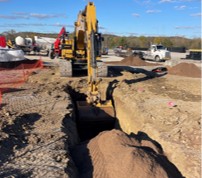
Significant Project Features: Approximately 150LF of Permeable Reactive Barrier (PRB) installed to a max depth of 11 ft. Approximately 950LF of Soil-Bentonite Installed to a