
Polymer Trenching
Bio‑polymer slurry trench systems for groundwater control, collection, and environmental remediation.
Overview polymer trenching
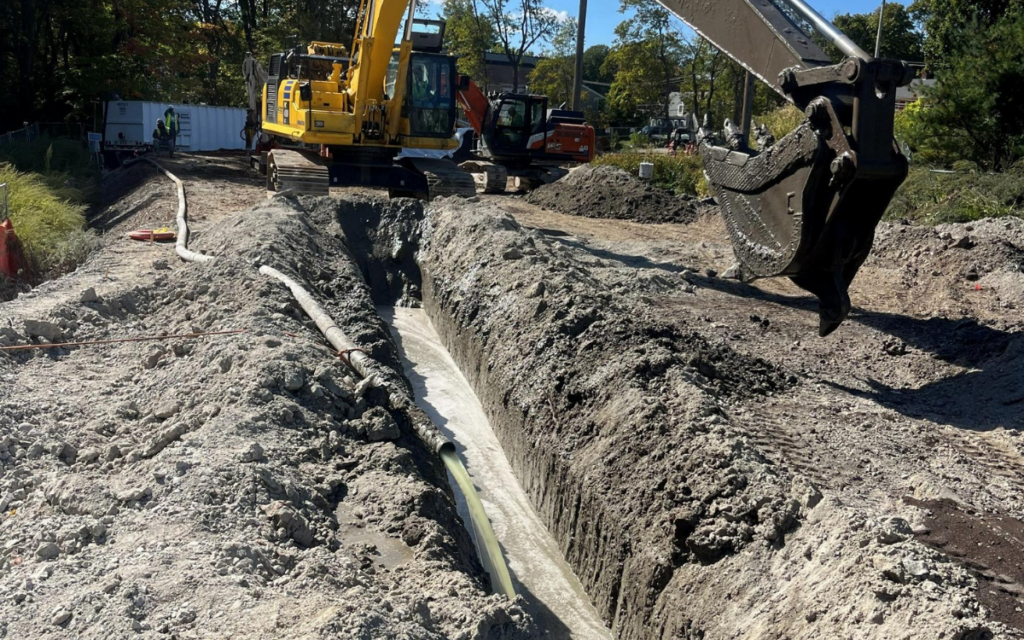
Polymer Trenching, which can also be referred to as bio-polymer trenching, is a specialized version of the slurry trench construction method used to install high flow elements for groundwater collection, cutoff, or treatment. The method utilizes an engineered slurry consisting of one or more polymers mixed with water to temporarily support vertical trench walls during excavation, allowing trenches to be constructed at significant depths and under high groundwater conditions. The technique allows installation of trenches without dewatering, internal shoring, or personnel entering the excavation, providing both safety and constructability advantages compared to traditional excavation methods. Polymer slurries are used in this application to prevent clogging or fouling the sidewalls of the trench so that flow is not inhibited after the trench is backfilled. In conventional slurry trenching with bentonite-water slurries, the soil pores can be clogged with clay particles that reduce flow into the trench.
Once excavation is complete, the trench can be backfilled with aggregate, reactive materials, piping, or a composite of multiple systems depending on project requirements. The polymer slurry is subsequently degraded through natural or engineered processes, fully developing a groundwater collection or treatment system that allows or encourages flow into or through the barrier.
key benefits
- Enables deep trench construction under high groundwater conditions
- Eliminates the need for dewatering or open-cut excavation
- Improves site safety by avoiding personnel entry into trenches
- Adaptable to collection, cutoff, and treatment applications
- Compatible with reactive media and composite systems
- Proven, long term performance in environmental and geotechnical projects
applications
- Groundwater collection and interception trenches
- Environmental remediation sites
- Deep drainage and seepage control systems
- Permeable Reactive Barrier installations
- Funnel & Gate groundwater treatment systems
- Infrastructure and dam seepage control projects
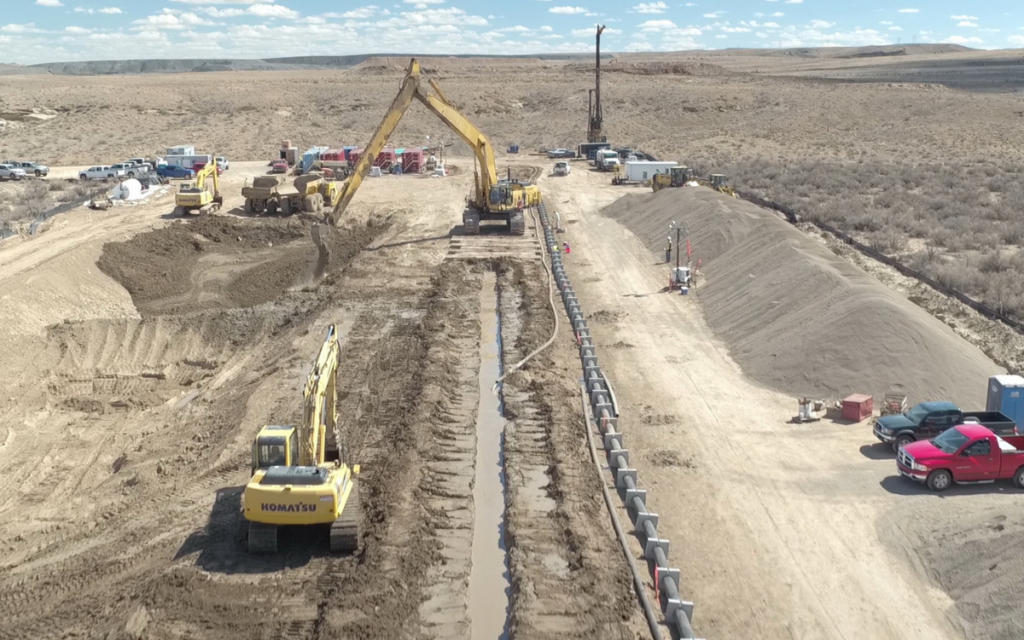
Ground Water Control
Groundwater control refers to methods that address seepage, hydraulic pressure, and subsurface water movement that affect excavation safety and structural performance. Cutoff walls and deep drains are common solutions used to manage groundwater in complex site conditions.
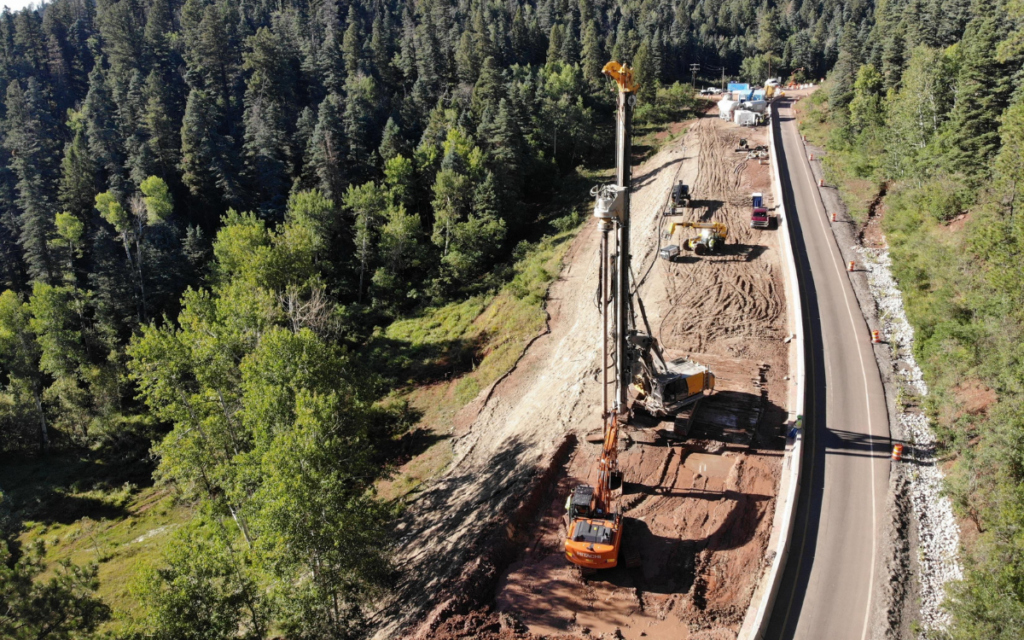
environmental remediation
Environmental remediation refers to methods for isolating, stabilizing, and treating contaminated soil, sediment, and groundwater. In situ stabilization and solidification performed using soil mixing is a common environmental remediation approach.
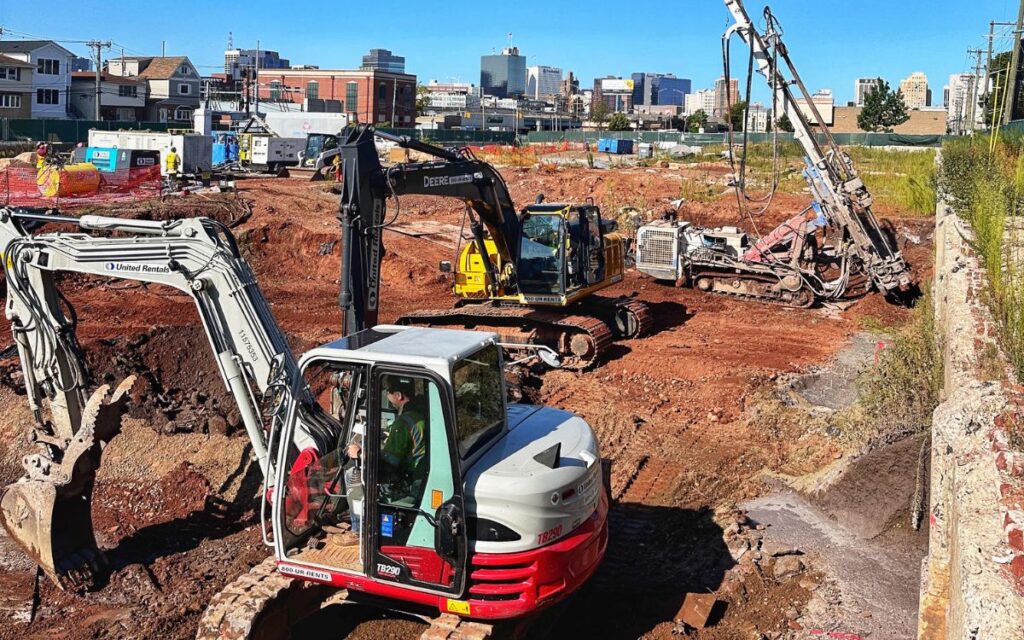
preconstruction services
Preconstruction services refer to early‑stage contractor involvement to address constructability components to inform project planning. Bench scale studies, constructability reviews, and pilot programs are commonly used to support design and solution selection.
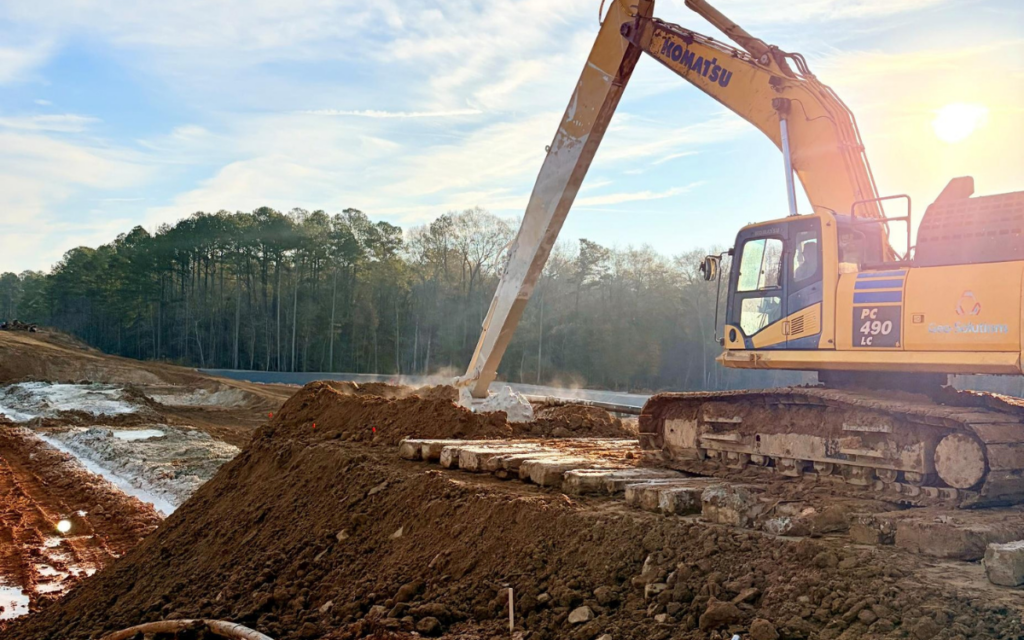
Deep Drains
Deep drains refer to high‑permeability subsurface systems used to control lateral groundwater flow. Polymer slurry trenching is a common method of installing deep drains that can include horizontal piping systems or just be trenches filled with permeable media.
Permeable Reactive Barriers
Permeable reactive barriers are high permeability passive groundwater treatment systems that allow groundwater flow through the barrier where the groundwater interacts with reactive media in the barrier. Permeable reactive barriers can be installed via polymer slurry trenching or with a chain trencher.